
ULTRASONIC DEGASSING PROCESSORS (UDP)
REMOVE DISSOLVED GASES AND ENTRAINED BUBBLES FROM A WIDE RANGE OF LIQUIDS
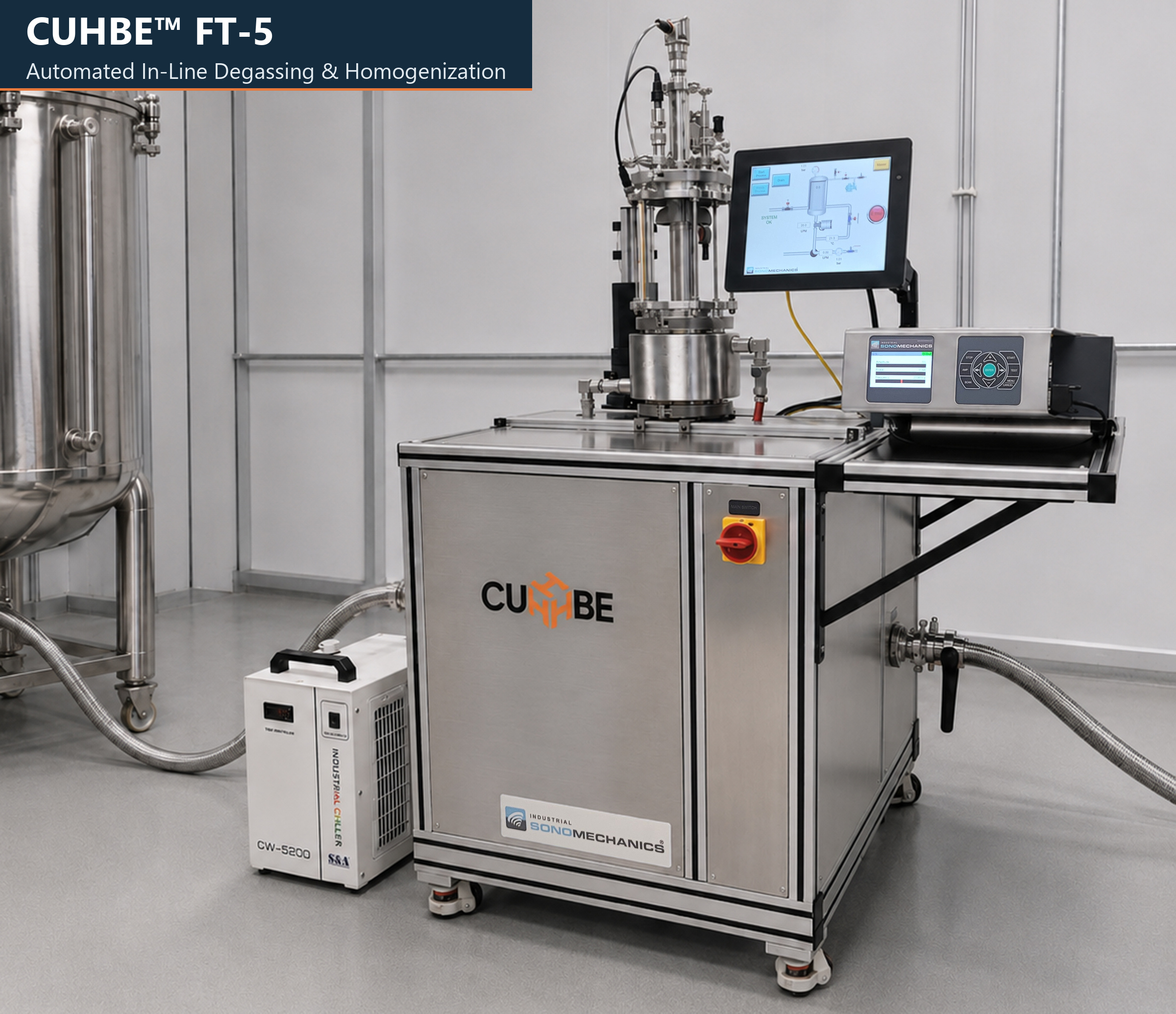
- Remove entrained bubbles and dissolved gases by high-amplitude ultrasonic exposure under reduced pressure.
- Address voids, oxidation, and other gas-related defects in filling, coating, casting, and other processes.
- Assess degassing feasibility and optimize treatment conditions through bench-scale and pilot-scale testing.
- Implement a production-level degassing system matched to your application and throughput requirements.
Speak with a Specialist
Assess, Optimize, and Implement Your Degassing Process
We begin with a scoping call to discuss how entrained bubbles or dissolved gases affect your material. If ultrasonic degassing looks like a fit, we typically follow the steps below, using UDP-Batch, a bench-scale batch system, for feasibility testing and UDP-Flow, a pilot-scale system with flow-through capability, for process optimization. These systems also support dispersion and homogenization when improved material uniformity is required.
STEP 1Assess process feasibility
STEP 2Optimize the process
STEP 3Get a production system
STEP 1Assess process feasibility
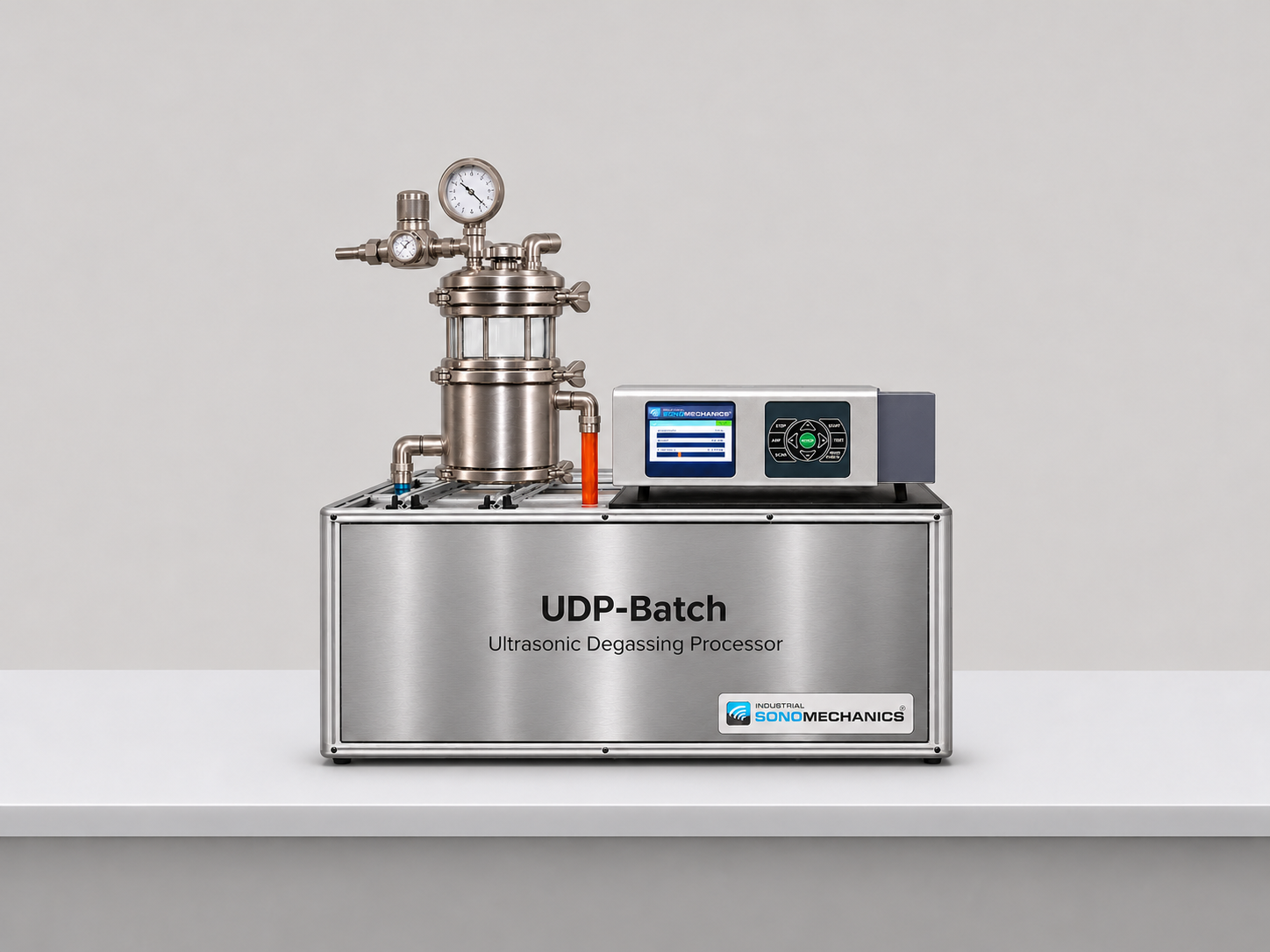
Feasibility testing is typically performed with UDP-Batch, a bench-scale system for ultrasonic exposure under reduced pressure in batch volumes of 3–4 L. Limited exploration of conditions reveals your liquid’s response and helps determine whether to invest in optimization with UDP-Flow.
We recommend renting or purchasing UDP-Batch for testing at your facility, with greater flexibility to explore conditions and evaluate results using your own methods.
Alternatively, we may offer basic trials at ISM’s facility when clear success criteria and our available methods allow feasibility assessment. Trials are documented with photos and videos; treated material can be returned for your evaluation.
STEP 2Optimize the process
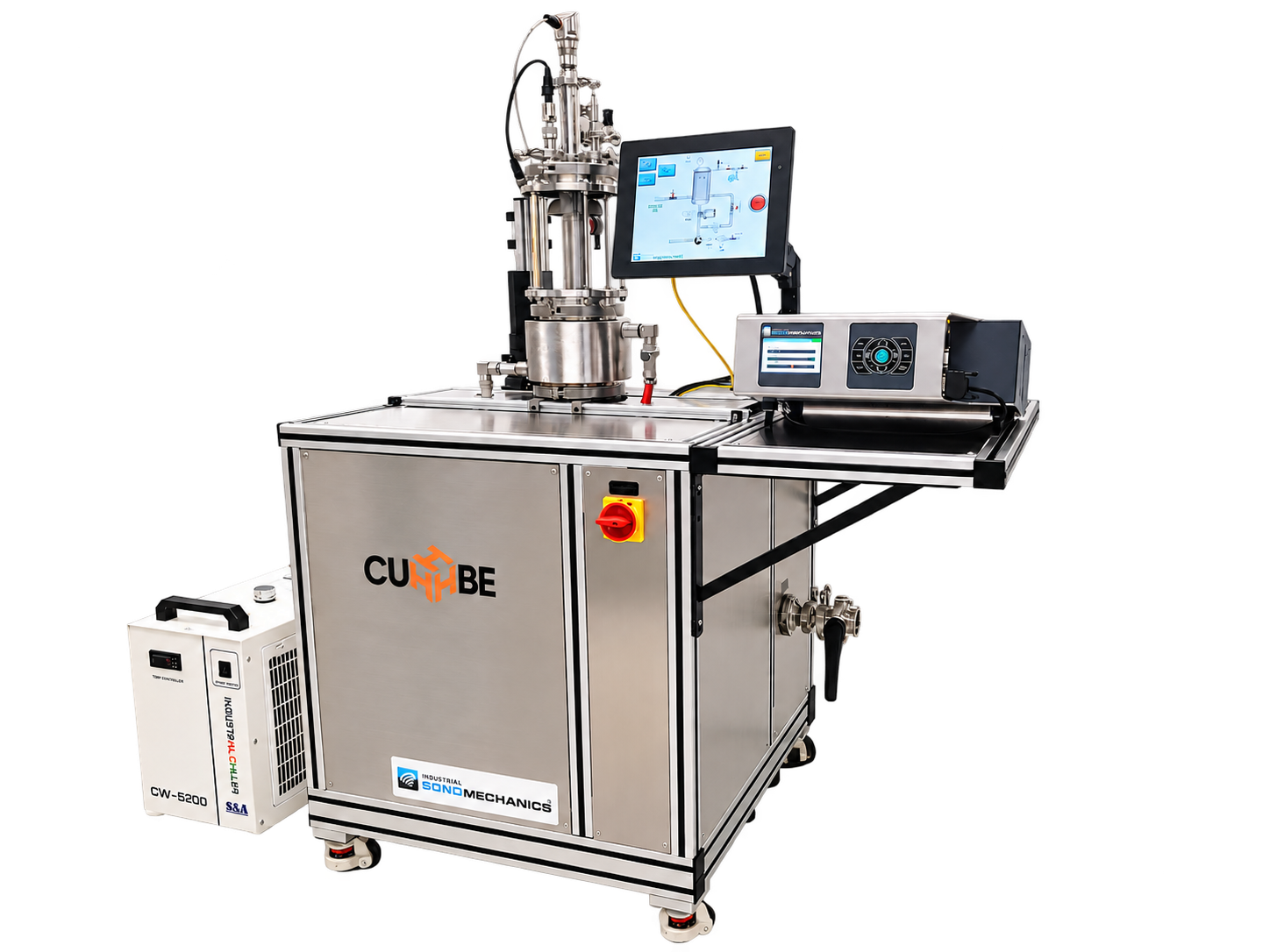
Process optimization is typically performed with UDP-Flow, a versatile pilot-scale system with broad ranges of ultrasonic amplitude, vacuum level, and other operating parameters. It supports recirculated batches up to 8 L or flow-through processing of larger quantities.
We recommend renting or purchasing UDP-Flow to explore these ranges at your facility and identify the operating conditions and system requirements for production.
Alternatively, we may offer optimization at ISM’s facility to explore selected operating conditions using clear success criteria and available test methods.
STEP 3Get a production system
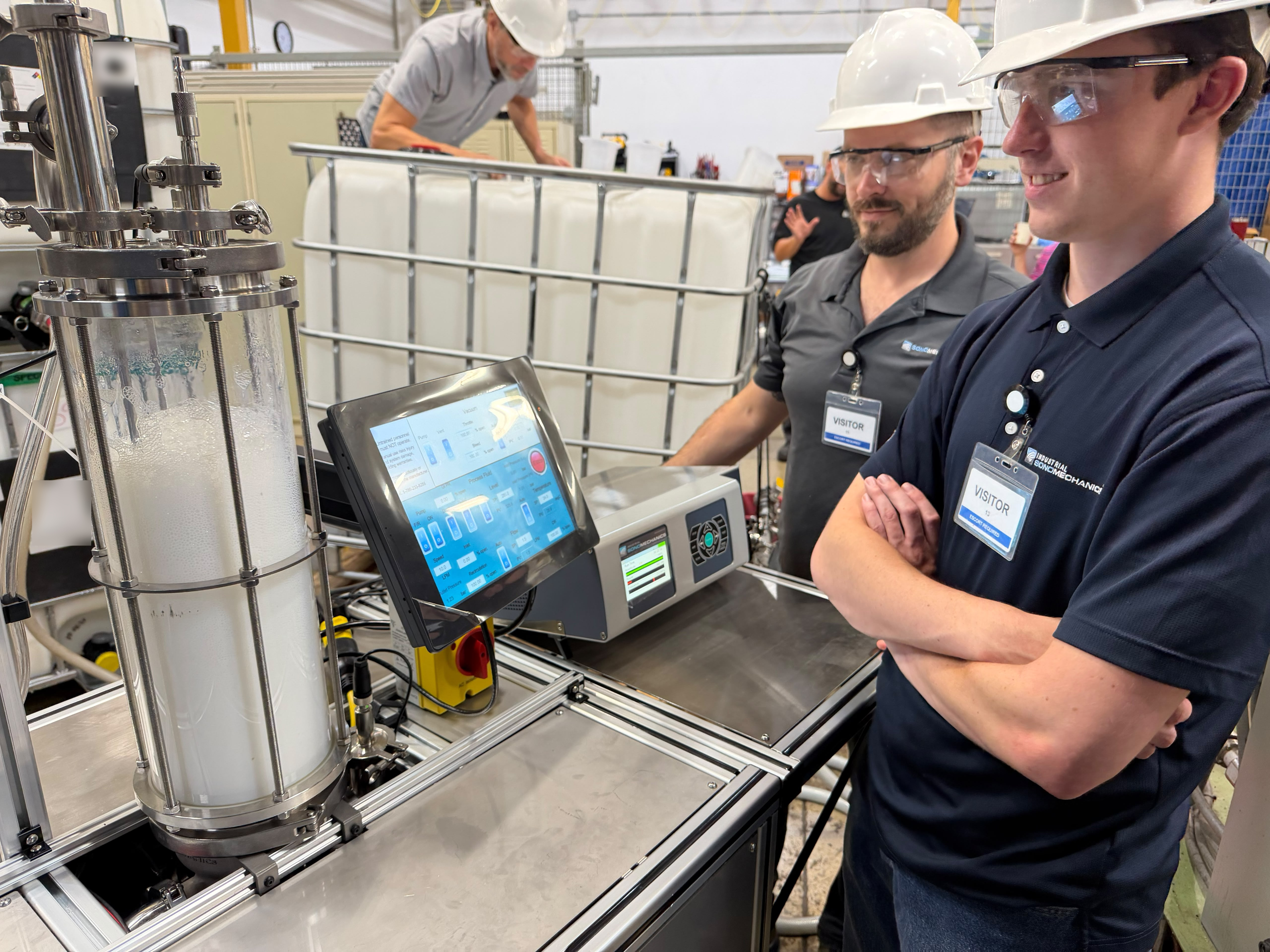
Production equipment is based on the operating conditions and system requirements established during testing. Throughput can remain at the tested rate or increase to meet your production requirements.
We recommend engaging ISM to design and build a streamlined degassing system, retaining the operating range and features your application needs while omitting unnecessary development options. Then install and put it into operation, with our assistance if needed.
Alternatively, purchase standard UDP-Batch or UDP-Flow equipment when it meets your process and throughput requirements and timing is critical.
Technology That Supports Scale-Up
Barbell Horn Ultrasonic Technology® (BHUT) maintains high vibration amplitudes over large radiating surface areas—providing the foundation for scaling your optimized degassing process from bench-scale testing to industrial production. See how BHUT enables scale-up.
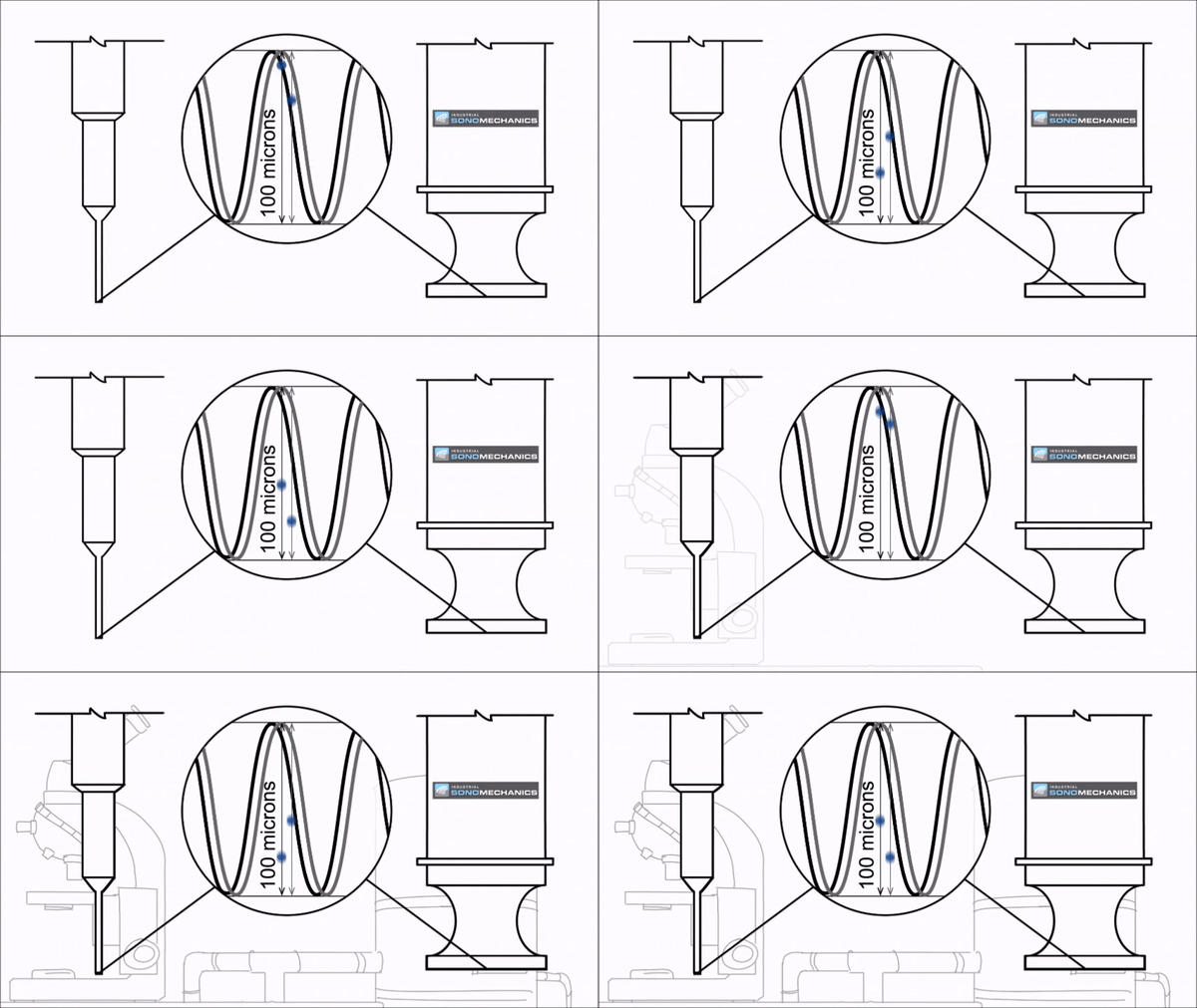
The acoustic horn transmits high-amplitude vibrations into the liquid. ISM’s Barbell Horn® technology supports high-intensity ultrasonic processing from laboratory development through industrial production.
Conventional Horns Have Scale-Up Limitations
Conventional horns produce high vibration amplitudes only with small output tips, limiting the volume that can be treated at high intensity.

Barbell Horns®: The Right Way to Scale-Up
Barbell Horns®, developed and patented by Industrial Sonomechanics, produce high vibration amplitudes in liquids with large output tip diameters, supporting high-intensity processing from laboratory development through industrial production.

TRUSTED BY LEADING COMPANIES AND RESEARCH ORGANIZATIONS


Tell us about your liquid, the problems caused by entrained bubbles or dissolved gases, and your processing requirements. We will help identify the appropriate system and next steps.
